
 See Our Latest Article on HelloNation

Vertigo is the sensation that the room is spinning, tilting, or moving when the body is still. Chiropractic care may help some people whose dizziness is related to neck pain or restricted movement, but it is not a universal treatment for vertigo and should not replace medical evaluation.
Because vertigo can also come from the inner ear, brain, blood vessels, medications, dehydration, or other health conditions, the first step is identifying the likely cause.
What is vertigo?
Vertigo is different from general lightheadedness or feeling faint. People with vertigo may describe:
- Spinning or rotating sensations
- Feeling pulled to one side
- Nausea or vomiting
- Unsteadiness while walking
- Symptoms triggered by rolling over, looking up, or bending down
- Difficulty focusing the eyes
A common cause is benign paroxysmal positional vertigo, often called BPPV. It occurs when tiny calcium crystals in the inner ear move into a location where they interfere with balance signals. BPPV often causes brief episodes when the head changes position.
Other causes include inner-ear inflammation, migraine-associated vertigo, Ménière’s disease, head injury, medication effects, and neurological or cardiovascular problems.
Can chiropractic care directly treat inner-ear vertigo?
Usually, no. Chiropractic adjustments do not reposition inner-ear crystals or cure most disorders of the vestibular system, which is the body’s balance system.
BPPV is commonly assessed with specific positional tests and treated with canalith-repositioning maneuvers. These movements are designed to guide displaced crystals back to their proper location. Vestibular rehabilitation may also be used to improve balance, eye movement control, and tolerance to motion.
A chiropractor may be able to recognize that symptoms appear consistent with a balance disorder, but treatment should be based on the suspected cause rather than the word “vertigo” alone. A person with new or recurring spinning sensations may need evaluation by a medical clinician, ear and balance specialist, or vestibular rehabilitation therapist.
When might chiropractic treatment be relevant?
Chiropractic care may be relevant when dizziness occurs along with neck pain, stiffness, reduced neck movement, or a recent strain. Some people develop a condition commonly described as cervicogenic dizziness, in which altered information from the neck appears to conflict with signals from the eyes and inner ear.
This diagnosis can be difficult to confirm because there is no single test that proves the neck is the cause. Other explanations, especially inner-ear disorders and neurological conditions, generally need to be considered first.
If the neck is contributing to symptoms, care may focus on gentle mobility work, posture, muscle tension, movement coordination, and exercises. High-velocity neck manipulation is not automatically appropriate for someone with dizziness. Treatment should be modified or avoided when the medical history suggests increased risk.
Neck-related dizziness is more plausible when:
- Dizziness began after a neck injury or strain
- Symptoms change with neck position or movement
- Neck pain and stiffness occur at the same time
- Ear symptoms, such as hearing loss or ringing, are absent
- A thorough evaluation has not identified a more likely inner-ear or neurological cause
Even in these situations, improvement with neck treatment does not prove that the original diagnosis was correct. Symptoms can fluctuate naturally, and several causes may occur together.
Is neck manipulation safe for someone with vertigo?
Safety depends on the cause of the symptoms and the individual’s health history. Neck manipulation can be inappropriate when dizziness is unexplained, sudden, severe, or accompanied by unusual neurological symptoms.
Rare but serious blood-vessel problems involving the neck have been reported after neck movement or manipulation. It can be difficult to determine whether an arterial problem began before treatment or was related to the treatment itself. For that reason, a cautious evaluation is especially important before any forceful neck technique.
A person should tell the treating clinician about:
- Recent falls, collisions, whiplash, or head injuries
- Sudden or severe headaches
- A history of stroke or blood-vessel disease
- Connective-tissue disorders
- Blood-clotting problems
- Recent infection or major illness
- New numbness, weakness, vision changes, or trouble speaking
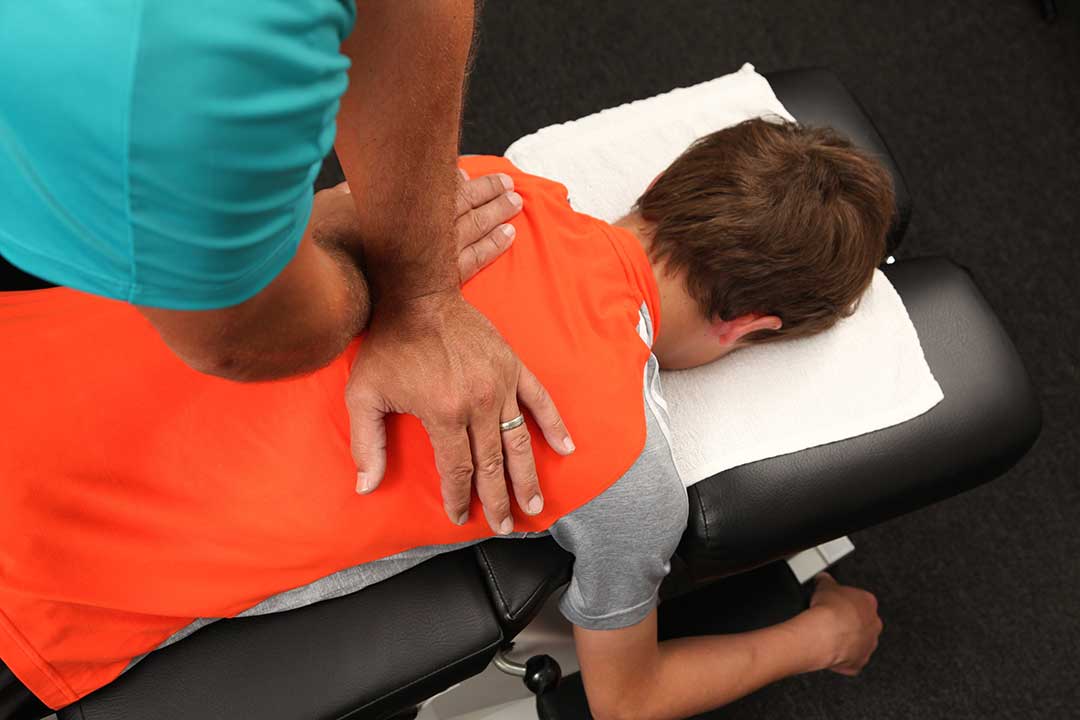
Gentle, non-thrust approaches may be considered in some cases, but “gentle” does not mean appropriate for everyone. Dizziness that has not been evaluated should not be treated as a routine neck problem.
When is vertigo an emergency?
Sudden vertigo with neurological or severe general symptoms requires emergency medical attention. Warning signs include:
- Facial drooping
- Weakness or numbness on one side
- Slurred speech or difficulty understanding speech
- New double vision or major vision changes
- Inability to stand or walk
- A sudden, unusually severe headache
- Chest pain, fainting, or severe shortness of breath
- Repeated vomiting with signs of dehydration
- New hearing loss, especially when sudden
These symptoms can occur with stroke, serious infection, heart-related problems, or other conditions that cannot be safely assessed through routine musculoskeletal care.
Winter conditions also create a practical concern for residents in Geddes. Ice, packed snow, and slippery entryways can increase the risk of falling when balance is impaired. Someone experiencing active vertigo should use support, avoid driving, and reduce fall hazards such as loose rugs, poor lighting, and cluttered walking paths.
What evaluation may involve
A useful evaluation begins with the timing and pattern of symptoms. The clinician may ask whether the sensation is spinning, faintness, imbalance, or visual disorientation. The duration of each episode, head positions that trigger symptoms, recent illness, medications, hearing changes, headaches, and injury history can all help narrow the possibilities.
An examination may include eye movements, balance, walking, coordination, neck movement, blood pressure, and positional testing. Depending on the findings, additional medical assessment may be needed.
This process matters because treatment differs substantially by cause. A repositioning maneuver may help BPPV, while vestibular exercises may help certain balance disorders. Medication review, hydration, migraine management, or treatment for another medical condition may be more appropriate in other cases. Neck-focused care may be considered only when the evidence points toward a musculoskeletal contribution.
What should someone with vertigo do first?
During an episode, sit or lie down in a safe position and avoid sudden head movements. Do not drive, climb ladders, or operate equipment while symptoms are active. Keep track of what triggered the episode, how long it lasted, and whether hearing changes, headache, neck pain, or neurological symptoms occurred.
Chiropractic care can sometimes play a supporting role when neck dysfunction contributes to dizziness, but it should not be assumed to be the primary answer. For unexplained, recurring, or new vertigo, identifying the cause and ruling out urgent conditions should come before neck manipulation or other hands-on treatment.
